010 023 8497
admin@albertonstars.com

A rigorous, CAPS-aligned curriculum delivered in small classes by qualified educators — building the academic foundation every learner needs to succeed in school and in life.
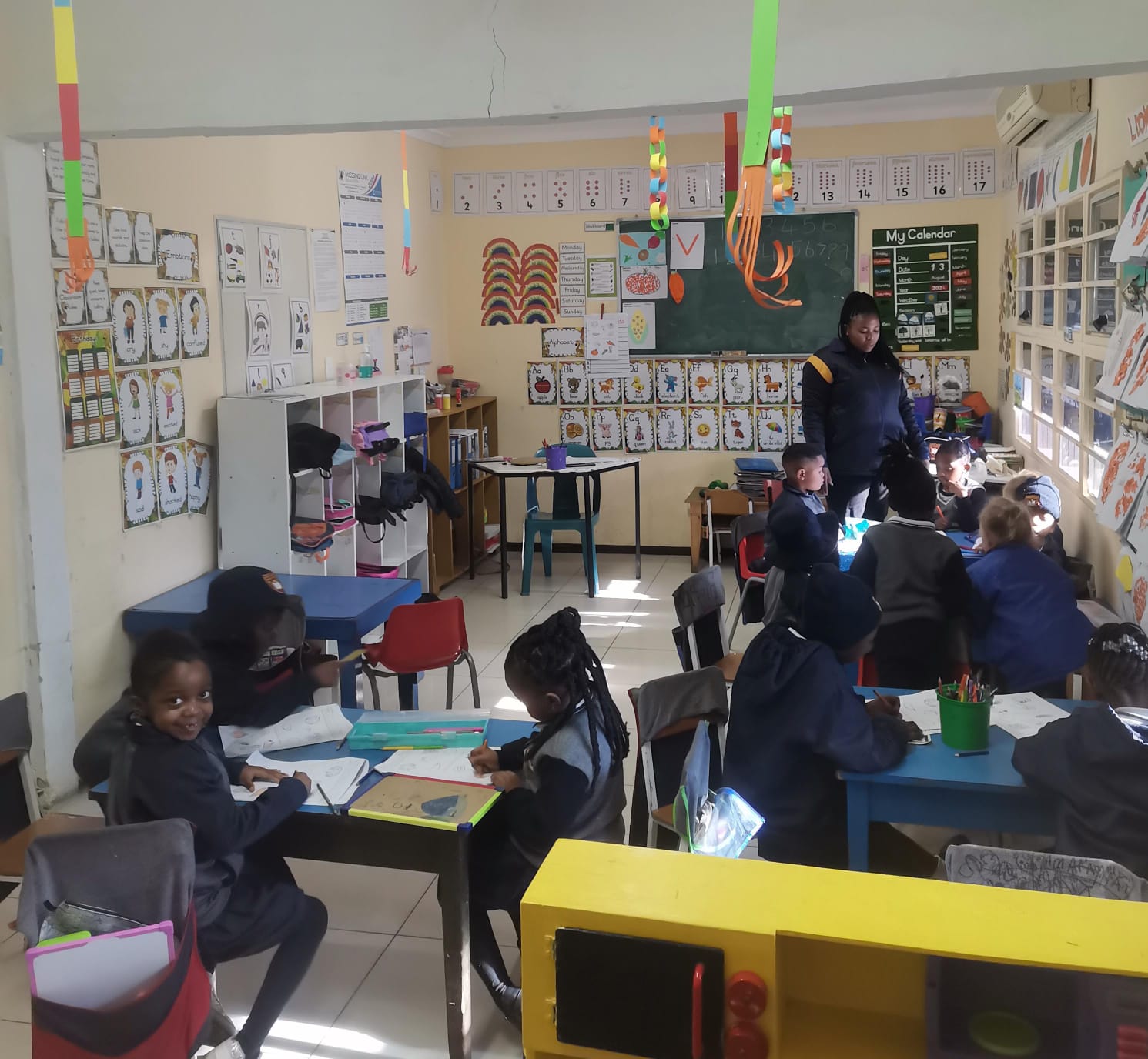
The prescribed National Department of Education syllabus (CAPS) forms the basis of all teaching at Alberton Stars Private School — adapted to reflect the Christ-centred lifestyle and worldview principles of our school community.
Our Computer Laboratory actively supports the teaching programme across all grades, and our small class sizes ensure every learner receives the individual attention needed to truly understand and apply what they learn.
Every subject across every grade follows the full South African National Curriculum and Assessment Policy Statement — ensuring learners meet national standards.
English is the primary language of learning and teaching from Grade 1 upwards — equipping all learners for success in English-medium further education.
Afrikaans is offered as a First Additional Language, with dedicated support to ensure all learners are bilingual and well-prepared through Grade 9.
Our Grade R classes are offered using a double-medium approach. In Grade 1 and 2, the language of instruction is English. In Grade 3, we follow a unique language model designed for a smooth transition.
From Grade 4, the language of instruction is English. English pupils take English Home Language and Afrikaans First Additional Language. Afrikaans pupils take both English and Afrikaans on Home Language level — equipping them fully in both languages through to Grade 9.
To equip all pupils for a smooth changeover to English as the only language of instruction from Grade 4, while ensuring Afrikaans learners are fully bilingual through Grade 9.
| Grade R | Grade 1 & 2 | Grade 3 | |
|---|---|---|---|
| Language of Instruction | Afrikaans and English | English | Afrikaans and English in the same class |
| English | Daily English language enrichment | English — Home Language level | English — Home Language level for all English and Afrikaans pupils |
| Afrikaans | Daily Afrikaans language enrichment | Afrikaans — 1st Additional Language level | Afrikaans HL (Afrikaans pupils — separate teacher) · Afrikaans FAL (English pupils — register teacher) |
| Mathematics | Afrikaans and English | English | English for all pupils |
| Life Orientation | Afrikaans and English | English | English |
The National Department of Education syllabus is adapted to reflect the Christ-centred worldview of our school. The Computer Laboratory supports learning across all phases.
The Foundation Phase builds the essential literacy, numeracy and life skills that underpin all future learning. Our play-based, structured approach ensures every child enters Grade 4 confident, capable and curious.
The Intermediate Phase deepens content knowledge across all learning areas while developing independent thinking, research skills and academic resilience. English becomes the sole language of instruction from Grade 4.
The Senior Phase prepares learners for the demands of further education and the world of work. A broad, rigorous curriculum ensures well-rounded graduates who are academically prepared, critical thinkers and socially responsible.
In today’s world, digital literacy is as important as reading and writing. At Alberton Stars, all pupils are introduced to formal computer training from Grade R — giving them a head start that most schools only begin in the intermediate phase.
Computer training runs continuously from Grade R through to Grade 6, then formally resumes in Grade 7 through to Grade 9 — ensuring every learner is digitally capable and confident throughout their schooling journey.
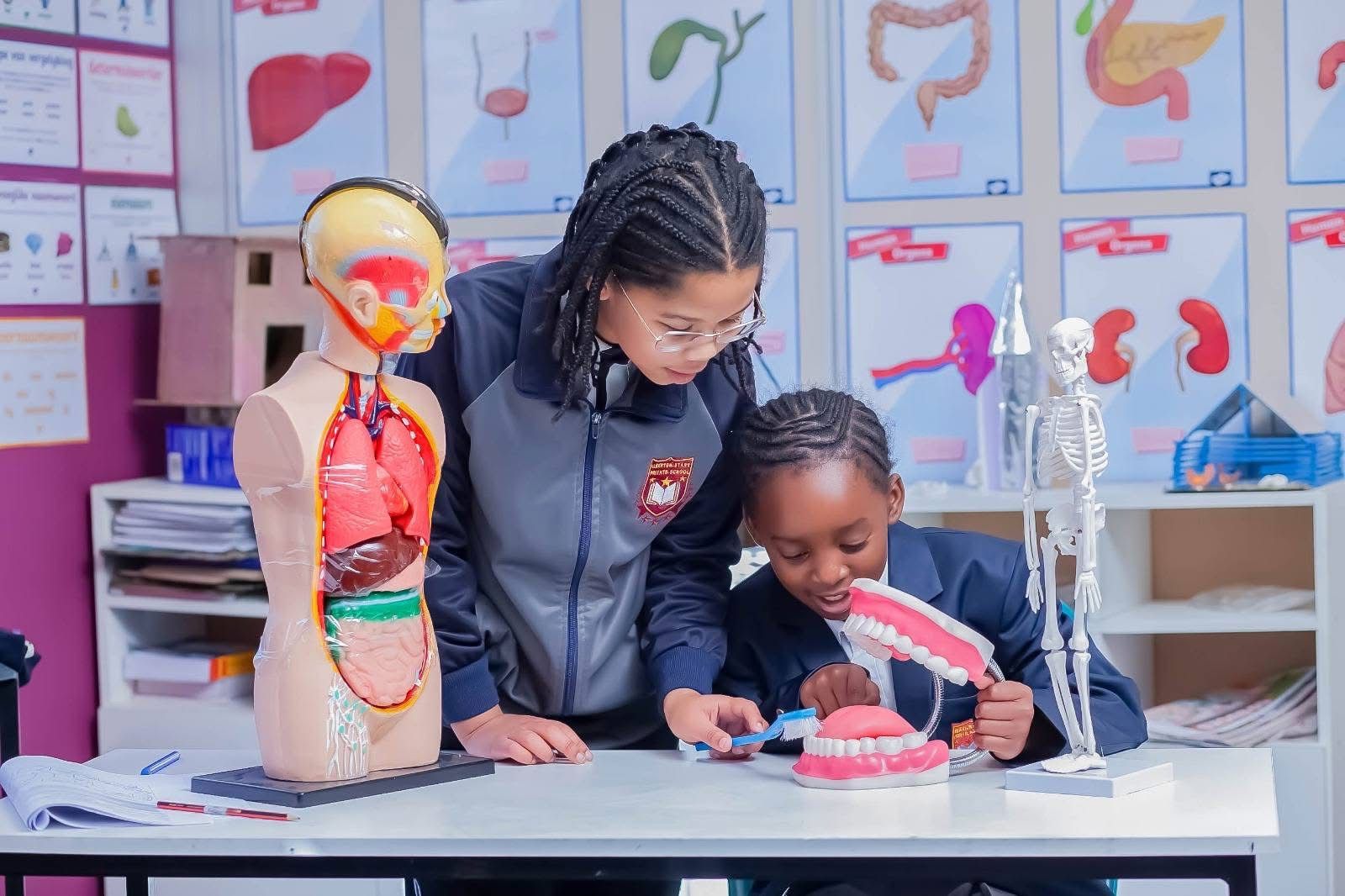
SBA is a compulsory component of the promotion mark. The SBA component conducted during the year counts for 75%, and the final examination component counts for 25% of the promotion mark.
Assessment at Alberton Stars is ongoing, purposeful, and designed to support — not just measure — every learner’s development.
In Grade R, pupil assessment is done according to the guidelines explained in the Grade prospectus. Assessment focuses on holistic developmental progress — social, emotional, physical and cognitive — using continuous observation, portfolio evidence and informal tasks rather than formal examinations.
Grades R to 3 are formally and informally assessed on a continuous basis using the 7-point scale. Assessment is based on:
In the Intermediate and Senior phases (Grades 4 to 9), pupils are continually assessed on both a formal and informal basis throughout the year. Formal examinations are held per term, supported by class tests, projects, assignments and practical activities that make up the SBA component.
Parents receive formal report cards at the end of each term. Our small class sizes mean teachers know every learner well — and parents are encouraged to communicate regularly with educators about their child’s progress. We believe in partnership between home and school.
2027 registrations are open. Enrol at Alberton Stars and give your child a CAPS-aligned education in a school that truly knows their name.